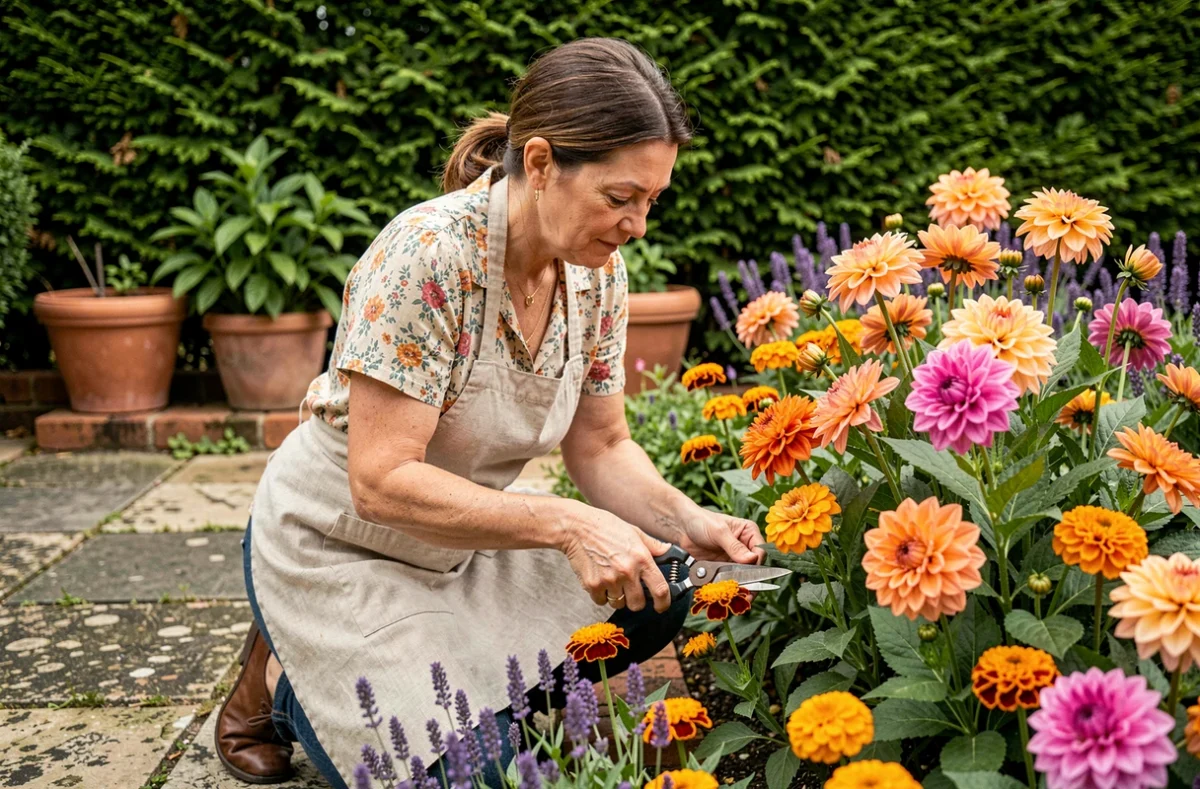
A garden that stays colourful twelve months a year isn’t built by randomly piling up a catalogue of varieties. Choosing colourful flowers to brighten a garden all year round means thinking in terms of flowering sequences, soil compatibility and drought tolerance. These are three factors most guides gloss over, yet they determine whether a perennial border succeeds or fails.
Shifting flowering times in a changing climate
Flowering periods are no longer as predictable as they were twenty years ago. Earlier springs and longer autumns are changing the timing of many perennials and annuals. A border designed to move from tulips to roses and then asters may end up with a gap in colour if two flowering periods overlap instead of following one another.
To compensate for these shifts, we favour combinations with long flowering periods. Gaura, for example, blooms from early summer until the first frosts. Shrubby salvias (Salvia microphylla) flower over a similar period. Combining species with long flowering periods reduces the risk of a visual gap between successive waves of colour.
The most reliable strategy is to structure the garden in three seasonal layers: late-winter bulbs (crocuses, snowdrops), midsummer perennials (coneflowers, rudbeckias, lavenders) and late-flowering plants (Japanese anemones, chrysanthemums). If one layer flowers a few weeks earlier or later, the other two ensure continuity.
Some colourful flowers from South America, such as Buenos Aires verbena and alstroemerias, add a palette of vivid hues that usefully complements classic European blooms, while tolerating heat reasonably well.
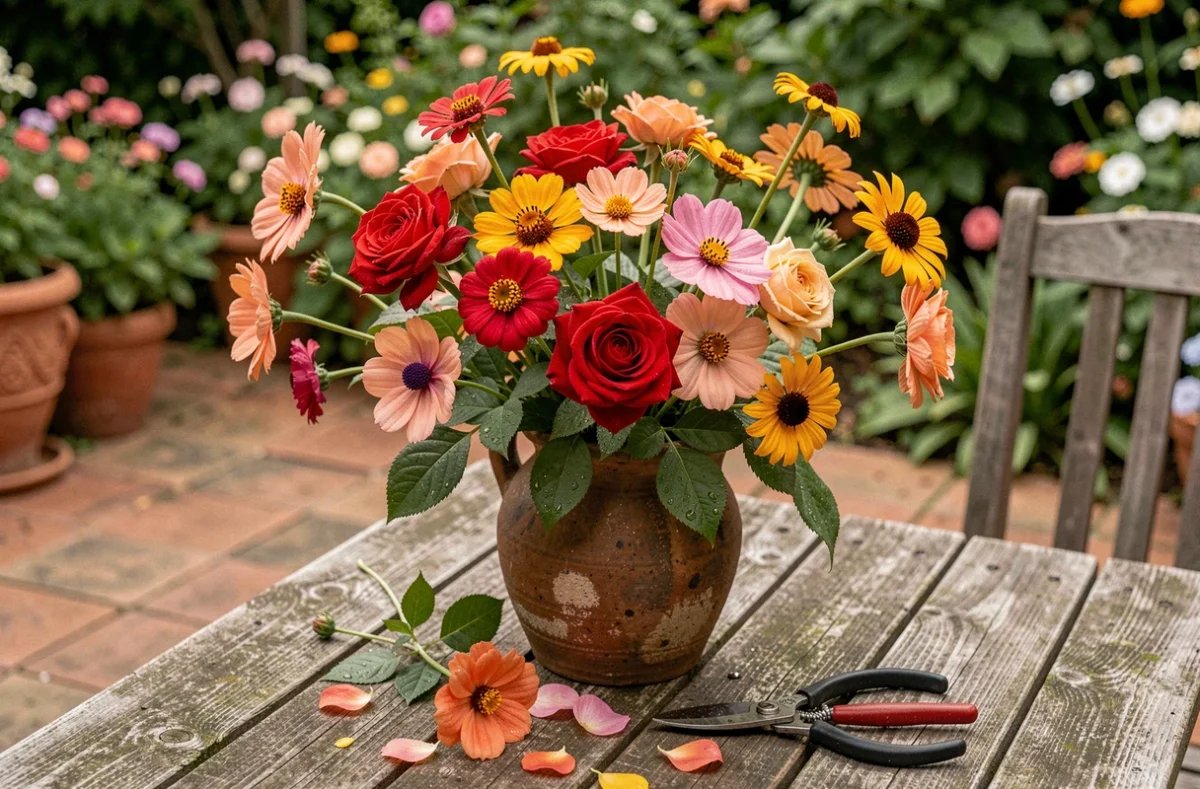
Drought-tolerant flowers: varieties and suitable growing medium
When watering is limited, choosing the right varieties matters more than anything else. Well-drained soil and mineral mulch halve water requirements compared with bare, clay-heavy soil.
Among the most reliable perennials for dry conditions are:
- Yarrow, available in yellow, red, pink and white, tolerates poor soil and needs almost no watering once established.
- Hardy ice plant (Delosperma) produces intense colours (orange, magenta, purple) and thrives in stony soil, on slopes and in south-facing rock gardens.
- African lily, which flowers in blue or white from June to August, withstands summer drought well once its fleshy roots are fully established.
- Cotton lavender, with its silvery foliage and yellow flowers, remains attractive even when not in bloom and tolerates both dry conditions and wind.
The growing medium directly affects a plant’s ability to withstand a lack of water. A mix of garden soil, coarse sand and mature compost in equal parts drains quickly while retaining enough organic matter to nourish plants. A mulch of pozzolana or gravel limits evaporation and keeps the root zone cool.
Flowers in pots on a patio or balcony
In pots, the growing medium is limited and dries out more quickly. Hardy geraniums, bidens and gazanias adapt well to these conditions. A thick terracotta pot regulates moisture better than a thin plastic container.
Adding expanded clay pebbles to the bottom of the pot isn’t a luxury: it prevents standing water from causing root rot, the leading cause of death for potted plants.
Targeted care for different types of flowering plants
Maintaining a garden that flowers all year round involves more than watering and pruning. Each category of plant needs specific care at particular times.
Annuals and biennials
Annuals (zinnias, cosmos, nasturtiums) are sown in spring and die after setting seed. Removing spent flowers each week extends flowering by several weeks, as the plant continues producing buds instead of directing its energy towards seed production.
Biennials such as pansies and forget-me-nots are sown in summer to flower the following spring. They need very little care: a helping of compost in autumn is enough.
Perennials and bulbs
Perennials need cutting back at the end of the season. Coneflowers and sedums can be left in place all winter: their dried stems add structure to the garden and provide shelter for insects.
Spring bulbs (tulips, daffodils, hyacinths) are planted in autumn at a depth equal to three times their height. Don’t cut back the foliage after flowering: it feeds the bulb for the following year. Wait until the leaves have turned completely yellow before removing them.
Colour palette and visual composition in the garden
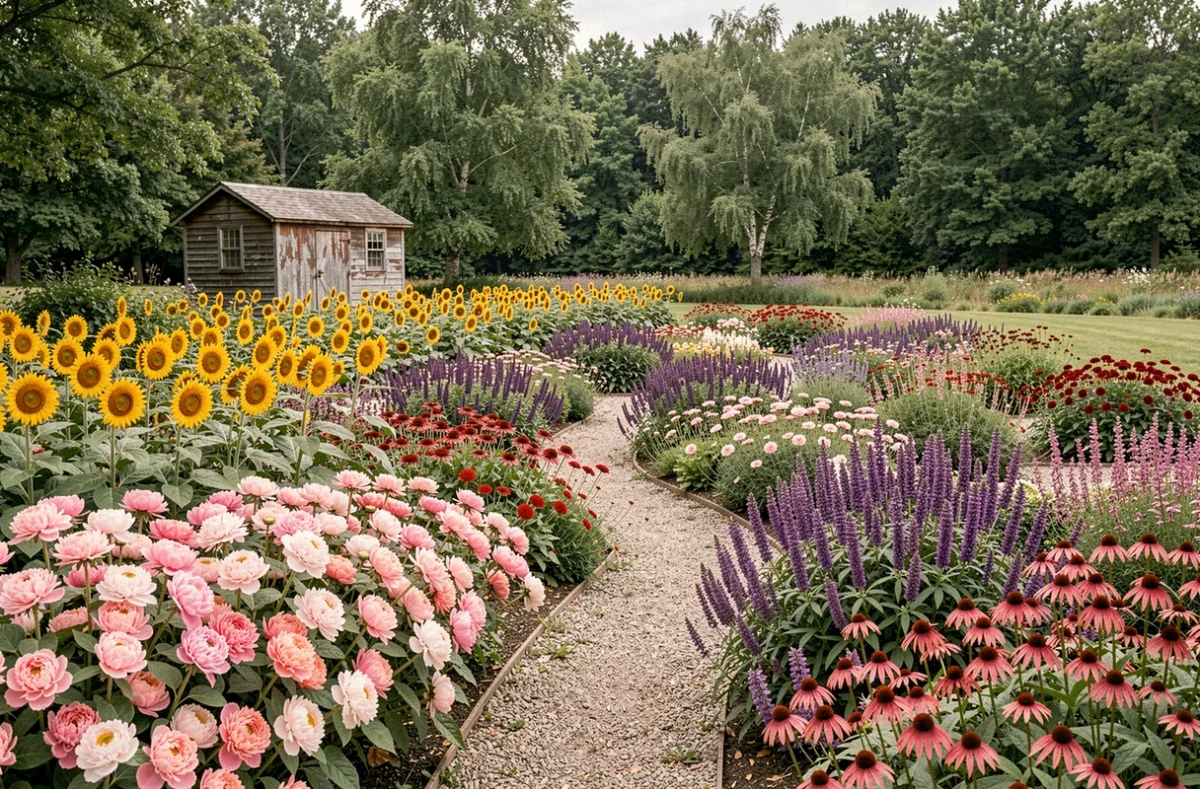
A colourful garden doesn’t mean one where every colour is combined without a plan. The most successful designs use harmonious combinations of two or three dominant shades, complemented by foliage that provides structure (ornamental grasses, heucheras, ferns).
- Warm palette: yellow, orange, red. Rudbeckias, crocosmias, cactus dahlias. A dynamic effect, best placed at the back of a border or along a path.
- Cool palette: blue, purple, white. African lilies, lavenders, white gauras. A calming effect, ideal near a patio or seating area.
- Complementary contrast: purple and yellow, or orange and blue. Creates a focal point that draws the eye to a particular area of the garden.
Evergreen foliage (boxwood, laurustinus, pittosporum) provides a stable backdrop. Without this permanent green structure, the garden looks empty in winter, even with winter-flowering plants such as hellebores and heathers.
A garden that remains attractive all year round depends on a balance between flowering sequences, drought tolerance and a cohesive colour palette. Master these three elements, and a simple flower border becomes a living composition that changes with the seasons.