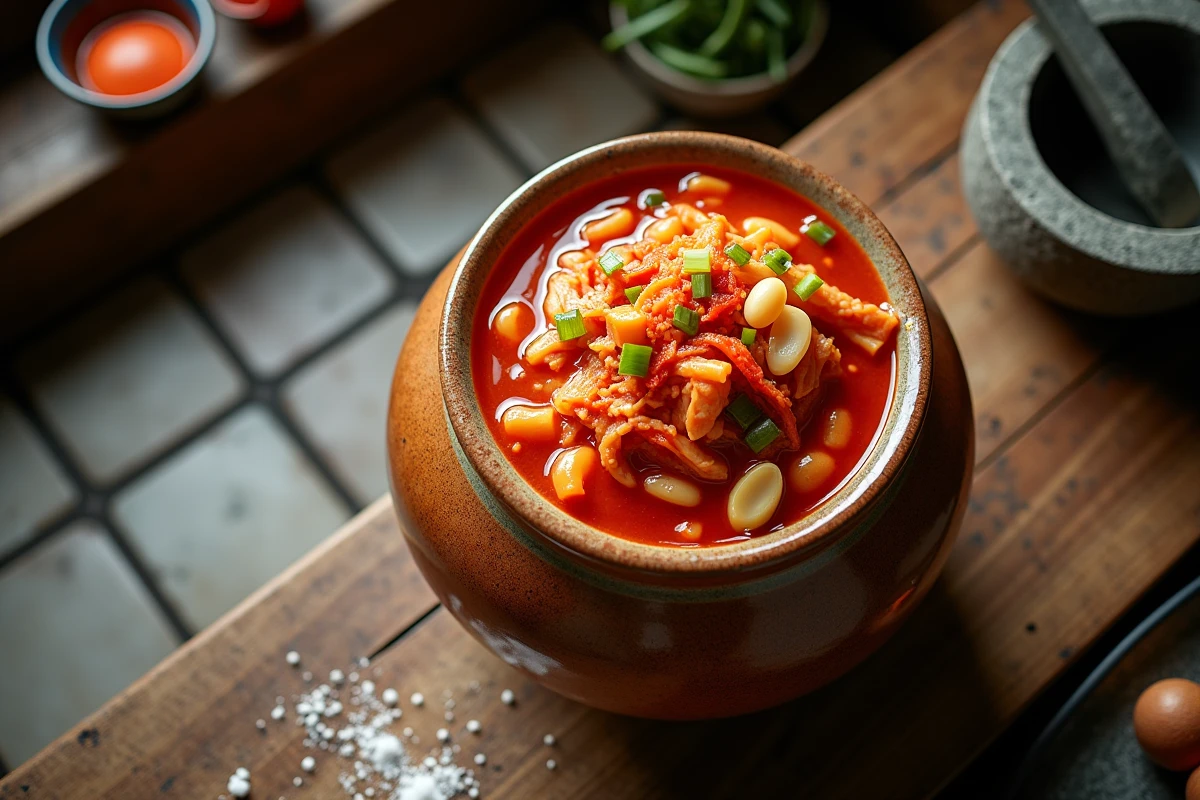
Kimchi ferments thanks to lactic bacteria that produce acid and lower the pH of the mixture. This rapid acidification is precisely what makes the lacto-fermentation of vegetables safe compared to other preservation methods. Botulism, on the other hand, occurs in low-acid, oxygen-free environments, conditions that well-prepared kimchi does not meet.
So why does the question keep coming up? Because there are cases of poisoning related to poorly conducted fermented products, and because confusing lacto-fermentation with vacuum sealing or oil preservation can be costly. Understanding where the real risk lies allows for anxiety-free fermentation.
Clostridium botulinum and kimchi: why the risk remains low
The bacterium Clostridium botulinum requires three simultaneous conditions to produce its toxin: an anaerobic environment (without oxygen), a pH above 4.6, and a favorable temperature. In a jar of kimchi, lactic bacteria colonize the environment within the first few hours and generate lactic acid. The pH drops below 4.6 within one to two days, making the development of C. botulinum virtually impossible.
You can delve deeper into the risks of kimchi on Chapeau Melon to better understand the mechanisms at play.
The real danger does not come from the kimchi itself, but from practices that prevent acidification. Adding too little salt slows the multiplication of lactobacilli. Mixing vegetables with oil without prior fermentation creates a non-acidic anaerobic environment, an ideal breeding ground for botulinum toxin. These are two different situations that must be clearly distinguished.

Salt, temperature, and hygiene: the three safety locks of homemade kimchi
The safety of kimchi relies on simple actions, provided they are not neglected.
The salt dosage in fermentation
Salt selects the good bacteria and slows down the bad ones. An insufficient concentration allows undesirable microorganisms to thrive before the lactobacilli take over. An excess of salt, on the other hand, also slows lactic fermentation and results in an overly salty product without real health benefits.
For kimchi, cabbage is usually salted before being mixed with the spice paste. The goal is to create a sufficiently salty environment to protect the first phase of fermentation, then let acidity take over.
Temperature and fermentation duration
Have you ever noticed that kimchi left at room temperature in summer acidifies much faster than in winter? Temperature accelerates or slows bacterial activity. Starting at room temperature for one to three days, followed by a transfer to the refrigerator, allows for steady acidification without rushing.
Kimchi that does not acidify after several days should be discarded. The absence of bubbles, lack of sour smell, and a still raw taste after a week in the refrigerator are warning signs.
Hygiene of equipment and vegetables
- Wash the jar with hot water and soap, then rinse thoroughly. Sterilization is not necessary for lacto-fermentation, unlike boiling water canning.
- Use fresh and healthy vegetables: a wilted or damaged cabbage carries more undesirable microorganisms from the start.
- Keep the vegetables submerged under the brine or juice. Any piece exposed to air promotes mold, not botulism per se, but alterations that are best avoided.
- Prefer a jar with a seal or a system with an airlock that allows carbon dioxide to escape without letting in outside air.
Bio-based films permeable to oxygen: a lead for securing home fermentation
Traditional fermentation uses clay pots, glass jars, or standard plastic bags. In recent years, research has focused on controlled permeability packaging, capable of allowing just enough gas to pass through to regulate the internal atmosphere without exposing the product to external contamination.
The recently tested bio-based films aim for a dual objective: to allow the CO2 from fermentation to escape (which limits overpressure in the container) while maintaining a sufficiently low oxygen level for lactic fermentation to dominate. This type of packaging could reduce the risk of surface mold without altering the taste or texture of kimchi.
For the home fermenter, the benefit would be to replace the daily action of opening the jar to “de-gas” with a film that passively manages pressure. Initial trials show promising results on the consistency of acidification, but these films are not yet available in mass distribution. This avenue is worth pursuing, especially for those who hesitate to start due to fear of mismanaging the jar’s atmosphere.
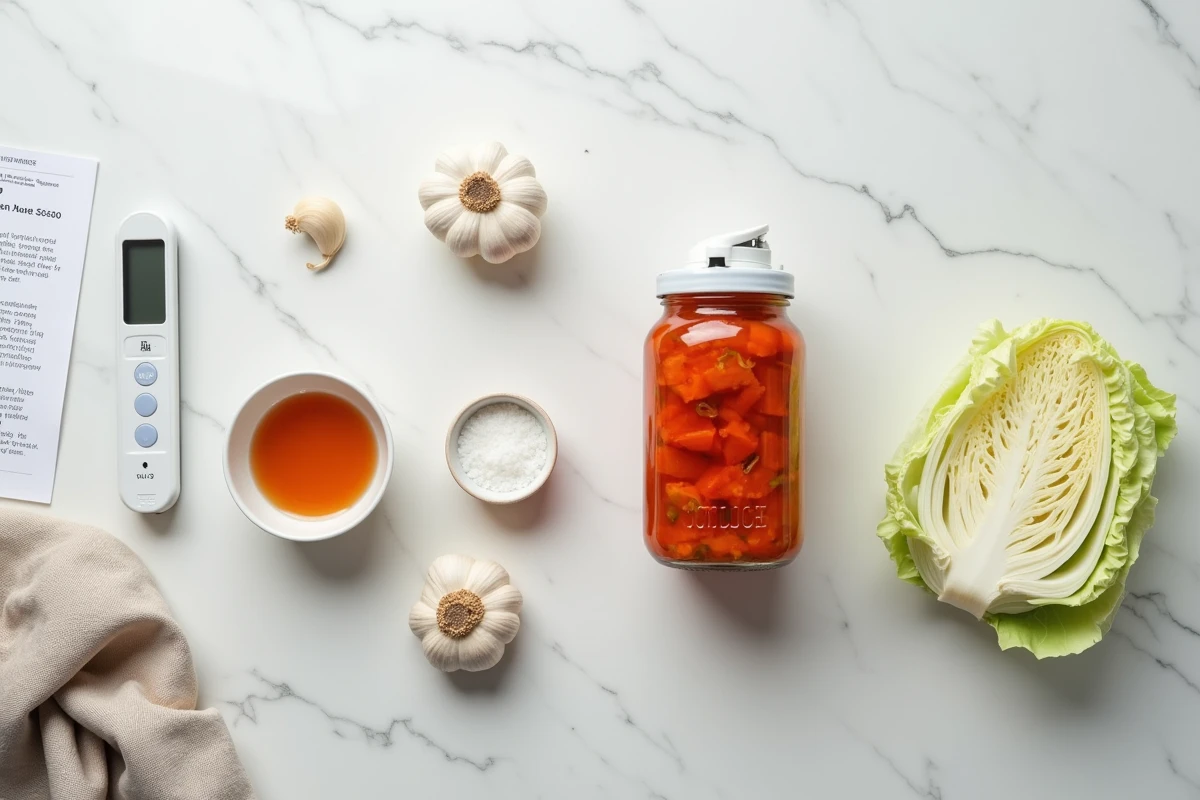
Kimchi and botulism: concrete mistakes to avoid
Foodborne botulism related to fermented foods almost always occurs in specific contexts. Here are the most common confusions:
- Putting raw vegetables directly into oil without fermenting them first. Oil creates an anaerobic environment and the pH remains neutral: this is the classic scenario for food botulism.
- Using a pressure cooker or water bath to “sterilize” already fermented kimchi, then sealing it tightly. Heat can destroy protective lactic bacteria without eliminating C. botulinum spores, which then germinate in the cooled jar.
- Adding large amounts of garlic puree or soybean paste to a mixture that is too low in salt. These ingredients raise the pH and slow acidification if the salt does not compensate.
Lacto-fermentation of salted vegetables is not a canned product. Mixing the two techniques without understanding the difference exposes one to real danger. Well-salted, well-packed kimchi stored in a cool place does not pose a botulism risk.
The key takeaway is this: as long as the pH drops quickly below the critical threshold and the vegetables remain submerged, the environment is hostile to Clostridium botulinum. Lactic fermentation is a preservation method that has been proven for centuries. The precautions to take are a matter of common sense, not advanced microbiology.