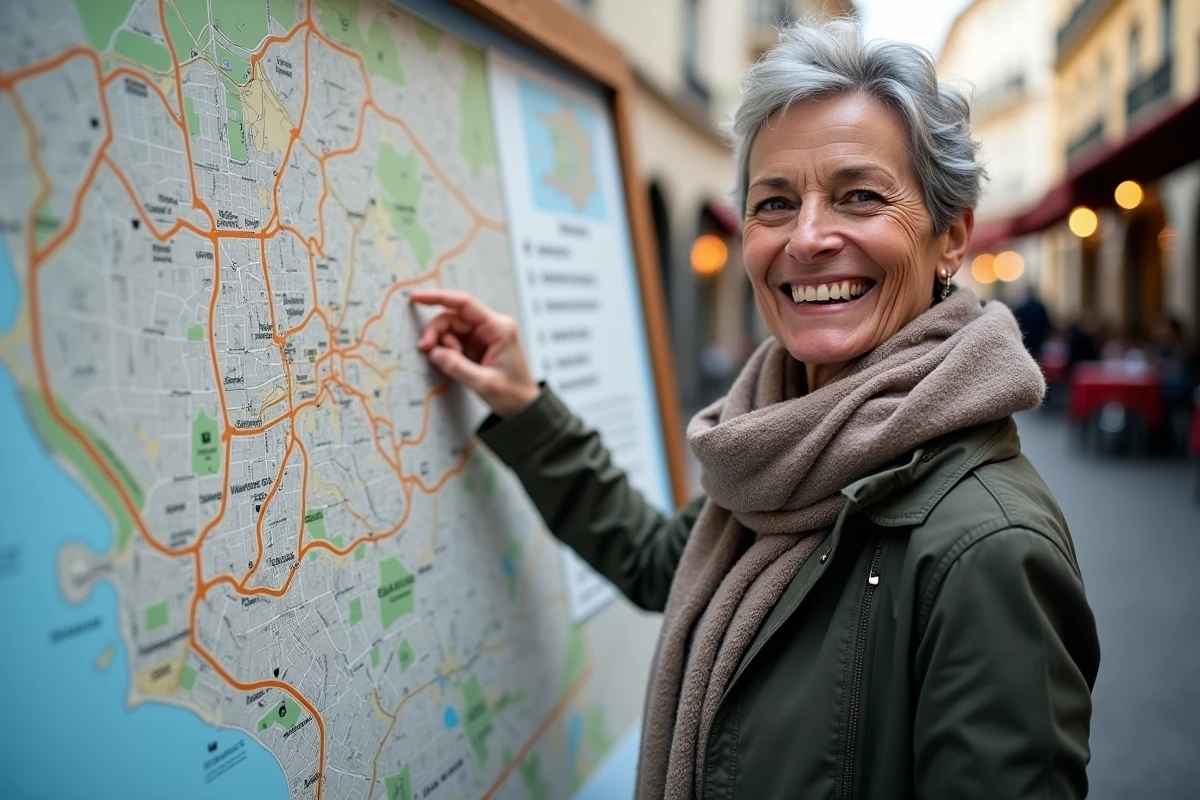
In Toulouse, the postal code 31000 does not only correspond to the city center, but sometimes extends to distinct administrative sectors. Several neighborhoods share the same code, while some peripheral areas benefit from a more precise division, such as Saint-Simon with 31100 or Lardenne with 31300, often blurring the boundaries between neighborhoods.
This organization is not fixed: historical developments, mergers, or successive divisions have shaped the current postal map, creating situations where the postal address does not always reflect the actual belonging to a neighborhood.
What are postal codes used for in Toulouse? An essential reference for daily life
The postal code map of Toulouse shapes the lives of the residents of the pink city and its neighborhoods. Since 1972, La Poste has assigned these five digits that orchestrate urban logistics, from mail sorting to the distribution of public services. Toulouse, rooted in Haute-Garonne, is immediately recognized by its departmental code 31, the starting point of a nomenclature that shapes each area of the city. But postal codes go far beyond the simple delivery of letters. They delineate geographical zones used daily by municipal services, transportation, school zoning, and emergency organization. Public institutions rely on this network to plan waste collection, organize parcel delivery, or calibrate infrastructure according to the needs of each sector. Professionals and residents adapt to this map: delivery drivers, craftsmen, healthcare professionals, each adjusts their actions based on the neighborhood divisions. In Toulouse, nothing is set in stone. The city moves, transforms, and knowledge of the sectors and their postal codes becomes second nature. To grasp the diversity and functioning of the Pink City, the postal code map serves as a valuable compass.
The postal code map of Toulouse: understanding the distribution of neighborhoods
The postal code map of Toulouse paints a picture of a city with multiple faces. Each neighborhood, each portion of territory, is distinguished by its own code, sometimes straddling complex administrative borders. The city center, identified by 31000, gathers around the Capitole a unique concentration of history, shops, and iconic places, blending residents, students, and visitors. To the west, 31300 encompasses Saint-Cyprien, Purpan, Lardenne: these neighborhoods, marked by the Garonne, combine heritage and residential vitality, between old suburbs and new facilities. The northern part of Toulouse, under the code 31200, includes Minimes, Borderouge, Montaudran: neighborhoods undergoing transformation, where population growth and major development projects are constantly reshaping the city. Further southeast, 31400 extends over Rangueil, Busca, Empalot, Pouvourville. Here, the landscape alternates between university hubs, quiet residential areas, and significant healthcare establishments.
Here’s how the main postal codes are distributed according to neighborhoods:
- 31000: Capitole, Carmes, Saint-Étienne
- 31300: Saint-Cyprien, Purpan, Lardenne
- 31100: Mirail, Bagatelle
- 31200: Minimes, Borderouge, Montaudran
- 31400: Rangueil, Empalot, Busca, Pouvourville
- 31500: Roseraie, Côte Pavée, Saint-Simon
The division of postal codes is not just a logistical matter: it also tells the social history of the city, its successive expansions, and the diversity of its inhabitants. This map sheds light on uses, sense of belonging, and the major challenges of each neighborhood, far beyond the mail that passes through.

Decoding the specifics of each area: what the postal code reveals about your neighborhood
In Toulouse, the postal code acts as a revealer. It structures the city, influences the choices of decision-makers, and impacts the daily lives of residents. Each sector bears the mark of decades of urban policies, developments, and successive transformations. This distribution of postal codes also serves as a basis for INSEE to refine the city’s demographic data. It guides urban policy, the designation of priority neighborhoods, as well as the distribution of services, access to public facilities, or the location of businesses. Local authorities, supported by the ANCT and prefectures, use it to target their actions, adapt aid measures, or readjust infrastructure to meet the needs of residents. The contrasts in Toulouse can be discerned through these numbers: the southeast sector (31400), centered on universities and hospitals, does not experience the same realities as the historic center (31000) or the western outskirts (31300). Even the real estate market is affected: prices, buyer profiles, attractiveness, all vary according to the postal code. Investors, associations, and housing actors rely on this data to understand and anticipate changes. This map, inherited from Toulouse’s urban history and adapted over time, reflects the choices, priorities, and dynamics of the metropolis. Reading the city through its postal codes is to understand the puzzle that makes up its identity, its tensions, its opportunities, and how it continues to transform. At each address, a story, a neighborhood, and a facet of the Pink City that is written daily.