What activities produce a measurable effect on health, social connections, and autonomy after the age of 60? The answer varies depending on the type of practice, its frequency, and its supervision. Rather than providing an exhaustive list, this article compares the main categories of activities for seniors based on their documented benefits and focuses on an underutilized lever: the medical prescription of adapted physical activity.
Adapted physical activity and medical prescription: a little-known legal framework
Since the law of March 2, 2022, a doctor can prescribe adapted physical activity (APA) to individuals suffering from a long-term condition, a chronic illness, presenting risk factors, or experiencing a loss of autonomy. This prescription exists, but it faces a concrete obstacle: APA sessions are not reimbursed by Health Insurance, even with a prescription.
This gap between prescription and funding is rarely explained in general guides. A senior suffering from osteoarthritis or diabetes can obtain a prescription for adapted gym sessions without benefiting from financial coverage. Some mutual insurance companies offer partial packages, but coverage remains heterogeneous.
For those looking for activities for seniors on Seniors du Monde, this regulatory point should be clarified in advance with the attending physician to guide the choice towards practices compatible with potential local assistance.
Comparison of senior activity categories based on their benefits
The activities offered to those over 60 cover a wide spectrum. The table below groups the main categories and compares their effects on four dimensions: physical condition, fall prevention, cognitive stimulation, and social connection.
| Activity Category | Physical Condition | Fall Prevention | Cognitive Stimulation | Social Connection |
|---|---|---|---|---|
| Gentle physical activity (walking, gym, aquagym, yoga) | High | High | Moderate | Moderate to high |
| Creative and artistic workshops (painting, pottery, writing) | Low | Low | High | High |
| Memory games and playful activities (board games, crosswords) | Low | Low | High | Moderate to high |
| Digital mediation (tablet workshops, video calls, social networks) | Low | Low | High | High |
| Volunteering and community engagement | Variable | Low | Moderate | Very high |
| Remote programs (like Activ’ and You) | Moderate | Moderate | Moderate | Low |
Two observations emerge from this cross-reading. Only gentle physical activity accumulates high effects on the body and fall prevention. In contrast, creative workshops and digital mediation surpass movement in cognitive and social aspects.
What the table does not show
The level of regular engagement weighs more than the type of activity chosen. A weekly pottery session followed for two years has a greater effect on morale than a gym membership abandoned after three months. Regularity matters more than intensity for seniors who resume an activity after a long break.
Remote programs for isolated seniors: the case of Activ’ and You
The Activ’ and You program targets retirees and pre-retirees aged 60 to 72. It offers thirteen sessions accessible from home, combining adapted gymnastics, tai chi, breathing exercises, stress management, and nutritional advice.
This format addresses a concrete situation: seniors who live far from sports facilities or whose limited mobility complicates travel. Remote programs combine movement, nutrition, and mental health in a structured pathway, distinguishing them from isolated online videos.
The limitation of these devices remains social connection. Following a program alone at home does not replace the dynamics of a group. Some organizations complement the sessions with phone calls or collective video conferences, but the effect remains less than that of in-person practice.
Fall prevention in seniors: an interdisciplinary approach
Fall prevention is no longer limited to balance exercises. Some programs aimed at autonomous seniors over 60 now combine physical activity, artistic mediation, and awareness of nutrition, hearing, and vision.
This interdisciplinary approach starts from a simple observation: a fall rarely results from a single factor. Poor visual correction combined with muscle imbalance and an unsuitable home environment multiplies risks. Workshops that intersect multiple disciplines allow for simultaneous coverage of these factors.
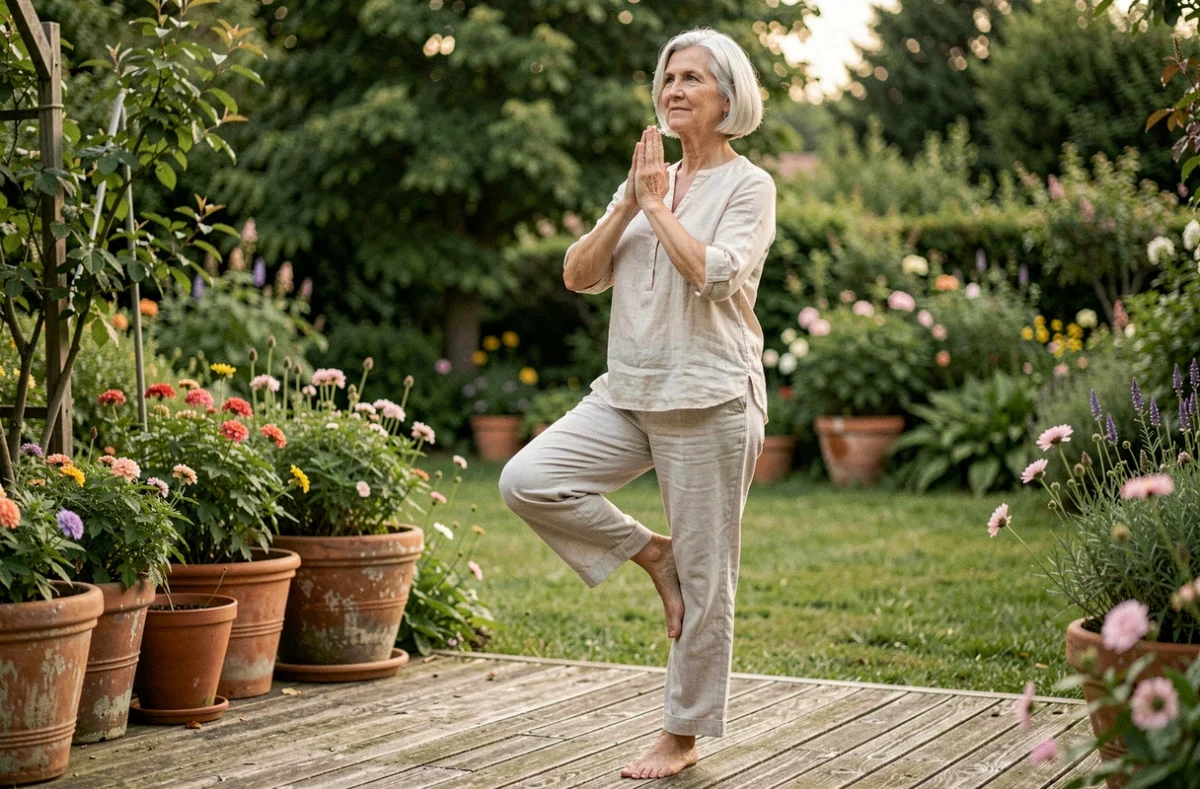
Adapted physical activity remains the central pillar. Balance exercises on one leg, heel-to-toe walking, and strengthening leg muscles are included in most protocols. Their effectiveness increases when integrated into a comprehensive program rather than practiced in isolation.
What criteria to choose a prevention workshop
- The workshop is supervised by a professional trained in adapted physical activity, not just a general sports instructor
- The program addresses at least two complementary dimensions (movement and nutrition, or balance and vision) rather than just one aspect
- The duration of the cycle is sufficient to allow for progression: formats of several weeks show more results than one-off sessions
Digital mediation and social fracture after 60
Digital workshops for seniors are not just about learning to send an email. They touch on administrative autonomy (online declarations, making medical appointments), maintaining family connections (video calls), and access to culture (digital libraries, virtual museums).
Digital mediation reduces social isolation as much as it develops technical skills. For seniors distanced from their families or living in rural areas, mastering a tablet significantly changes daily life.
These workshops work better in small groups, with individualized support. Organizations that offer regular follow-up over several months achieve more lasting results than one-off half-day introductions.
- Workshops in media libraries or community centers: free or low-cost, often led by trained volunteers
- Programs run by specialized associations: structured pathways with educational progression
- Home support: suitable for people with reduced mobility, but more expensive and less frequent
The choice of an activity after 60 should be guided by data rather than habit. Crossing physical activity, cognitive stimulation, and social connection throughout the week covers a spectrum of benefits that no isolated practice can offer. The question of funding for prescribed APA remains: as long as reimbursement does not follow the prescription, some of the affected seniors will remain excluded from these programs.