What color palettes, materials, and stylistic choices truly separate a trendy interior in 2026 from one stuck in the codes of 2022? Decoration and the art of living evolve through subtle shifts, and the gaps between rising trends and those that are waning are measured by specific criteria: dominant color, key material, degree of simplicity, and relationship to vintage furniture.
Colors, materials, and styles: what is rising versus what is declining in interior decor
Comparing trends across three axes allows us to visualize where the shift occurs. The table below contrasts still widespread choices with orientations that are gaining ground for a trendy interior.
| Criterion | Declining Trend | Rising Trend (2025-2026) |
|---|---|---|
| Color Palette | Ubiquitous beige, clinical white | Clay red, sienna, ochre, deep browns |
| Reference White | Bright, cold white | Cloud Dancer (Pantone 2026): soft and airy white |
| Key Decorative Material | Rattan, caning | Paper mache, dark wood |
| Dominant Style | Pure industrial (raw loft) | Softened industrial, mixed vintage and curves |
| Degree of Simplicity | Strict minimalism | Soft minimalism: personal objects, soft materials |
The clearest shift concerns color. According to SeLoger, beige is declining in favor of warmer, more embodied colors like caramel or sienna. This is not just a simple change in color palette: it is a shift towards more expressive palettes that give character to a living room or bedroom without resorting to saturated shades.
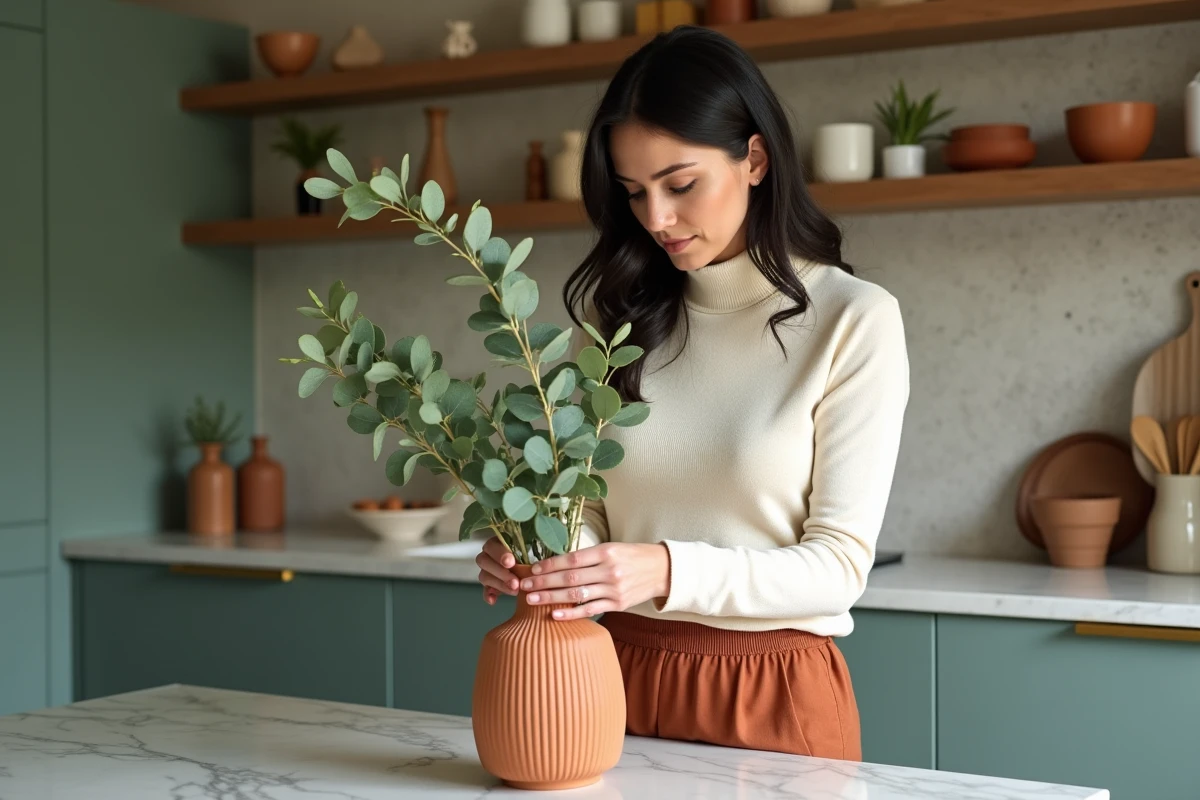
On the materials side, paper mache makes a notable entrance alongside dark wood, according to Label Maison. The sought-after aesthetic is more artisanal, more sculptural, in contrast to the smooth, uniform surfaces that dominated decoration in recent years.
Selections like those offered by By Caroline and CO illustrate this turn towards pieces with strong personality, where each object tells a story rather than simply filling a space.
Soft minimalism and warm colors: why the living room is changing its face
The living room concentrates the essence of these changes. It is the room where decoration choices are most visible and where the shift from old minimalism to new can be best read.
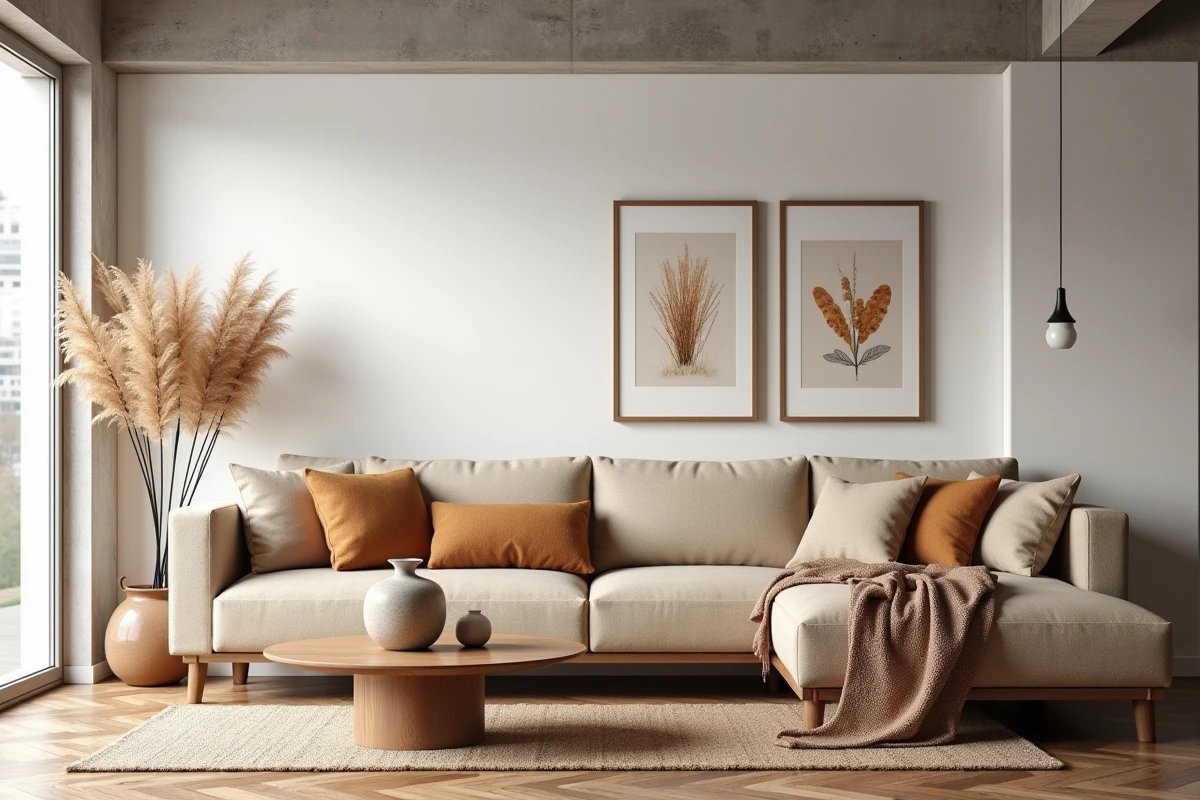
Ootravaux describes a move away from excessive minimalism in favor of soft minimalism with personal objects and soft materials. Specifically, this means that a streamlined sofa coexists with a thick wool throw, an artisanal ceramic on the coffee table, and one or two vintage pieces. Simplicity remains the skeleton, but visual warmth dresses it all.
Warm colors enhance this effect. An ochre or sienna wall in a living room changes the perception of space much more than yet another light gray wall. However, these shades require furniture that does not overwhelm them: dark wood and natural textiles work, while chrome metal does not.
The common mistake about trendy colors
Applying a trendy color to all four walls of a room rarely produces the desired effect. A single wall in clay red against three walls in soft white (like Cloud Dancer, the Pantone 2026 reference described by Eminza as a soft, airy white, less clinical than bright white) creates a focal point without weighing down the overall look.
The opposite trap also exists: multiplying artisanal materials in the same space. A paper mache object gains impact when it is isolated on a simple wooden piece of furniture. Placed among ten other decorative items, it loses all readability.
Softened industrial style: how interior design reinterprets the loft
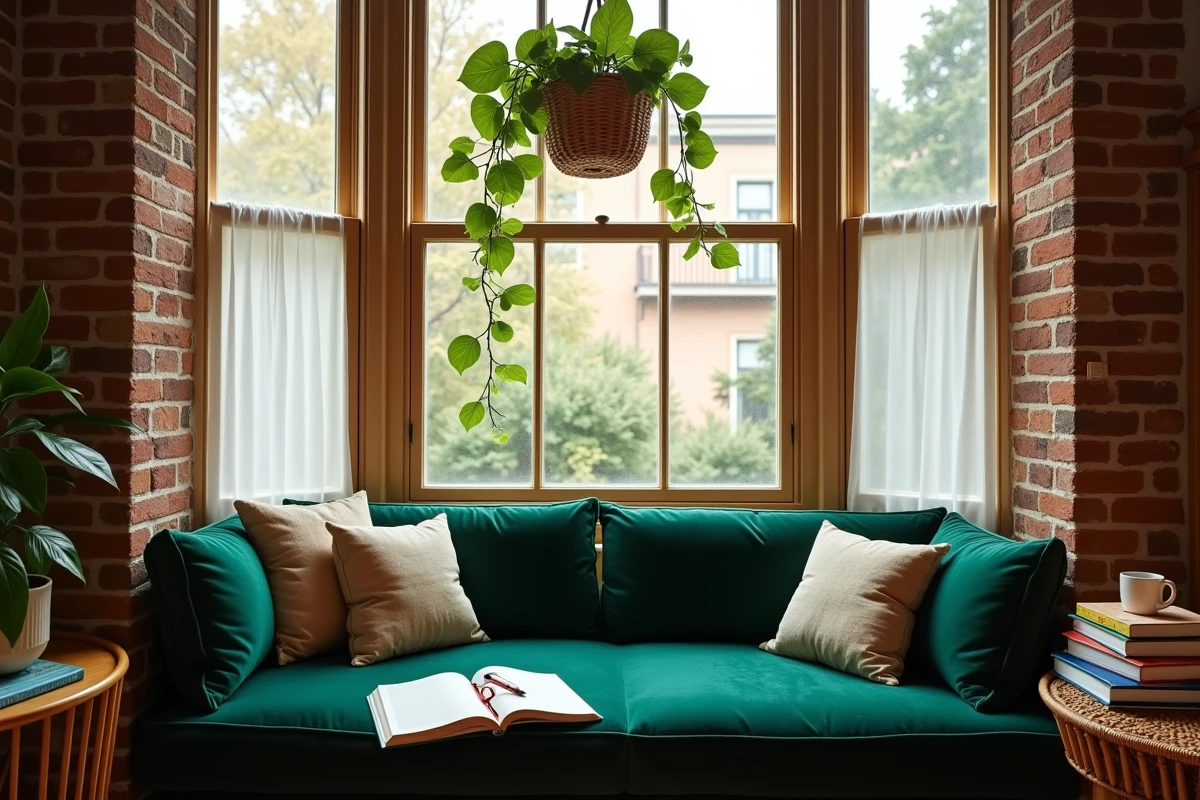
Pure industrial style, characterized by exposed bricks, steel pipes, and polished concrete without any soft counterpart, is in clear decline according to Ootravaux. What replaces it is not its disappearance, but its reinterpretation.
- Curves replace right angles: rounded armchairs, organic lighting, and shelves with soft shapes soften the raw structure of an industrial space
- Vintage mixes with factory elements: a 1960s dresser or an antique gold mirror breaks the coldness of a brick wall, creating a contrast that works better than an accumulation of metal
- Thick textiles (washed linen, boucle wool, corduroy) help absorb the dry acoustics of large open volumes, a functional benefit as much as an aesthetic one
This blend produces a more livable result. An interior that retains the high ceilings and workshop windows but adds a thick wool rug and a sofa with soft lines offers the best of both worlds.
Furniture and decor ideas: the role of reclaimed furniture
Reclaimed or vintage furniture is no longer a default budget choice. It has become a fully-fledged decorative choice because it brings a patina and uniqueness that no new piece can replicate. A solid oak farmhouse table in a modern kitchen creates a deliberate contrast that anchors the room.
Dark wood, noted by Label Maison as a rising material, is often found in these vintage pieces. Walnut, mahogany, or stained oak provide a visual depth that light Scandinavian wood, ubiquitous for the past decade, no longer offers.
The art of living and decoration: what the choice of a palette reveals
The shift from neutral beige to embodied warm colors reflects a broader change in the art of living. The trendy interior in 2026 embraces an identity rather than seeking neutrality. Expressive palettes, artisanal materials like paper mache, and soft minimalism converge towards the same idea: a space that resembles its inhabitants rather than a catalog.
The focus also shifts on the notion of design. A paper mache object or a reclaimed dark wood piece does not need to be signed by a well-known designer to have its place in a well-curated interior. Perceived value migrates from the label to the overall coherence.
For a living room, bedroom, or kitchen, the guiding thread remains the same: limit the number of trends adopted simultaneously. Two or three strong choices (an ochre-brown palette, mixed vintage-contemporary furniture, thick textiles) are enough to create an interior that stands the test of time, whereas the accumulation of micro-trends produces a dated result within months.