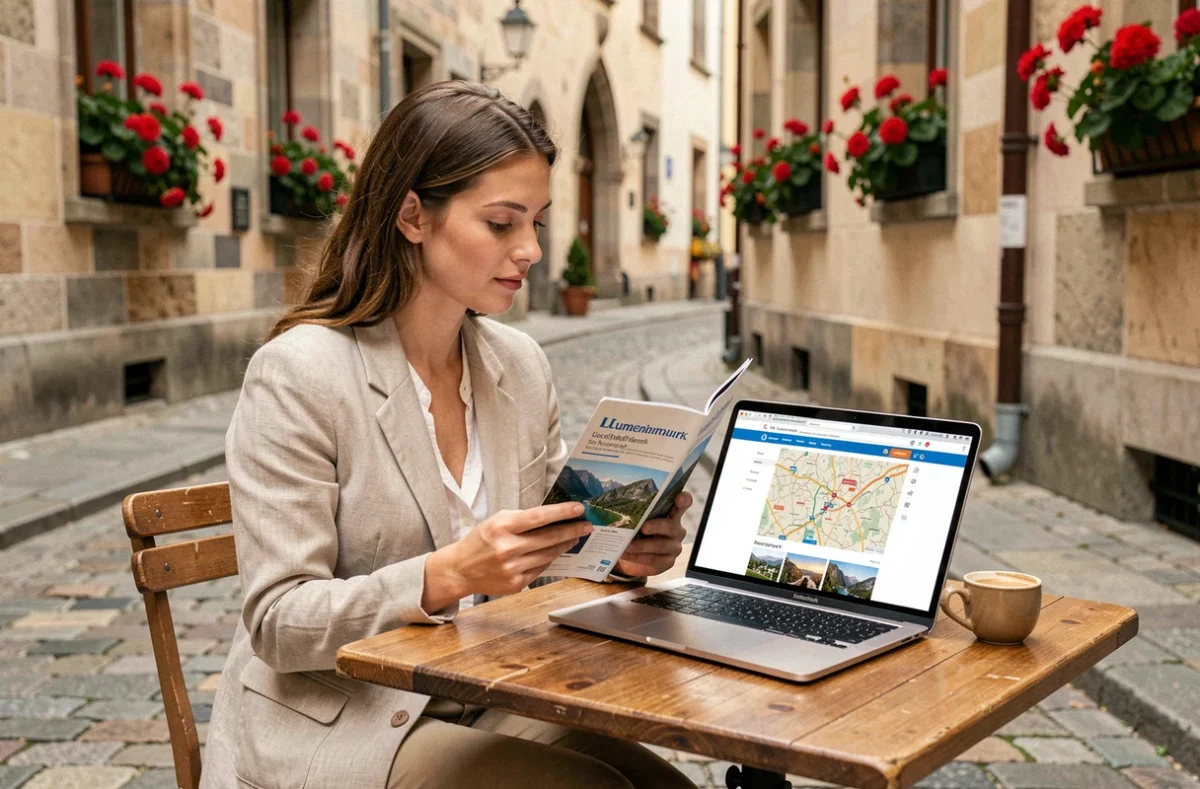
Travel guide platforms dedicated to Luxembourg are multiplying, but their functional coverage remains very uneven. Between the static entries inherited from tourism offices and the aggregators recycling the same lists of monuments, we observe a clear gap between what the connected traveler expects and what most French-speaking resources actually offer.
Free transport in Luxembourg: the limits that online guides overlook
The free public transport in Luxembourg is consistently presented as a key selling point. We recommend going beyond this simple marketing argument to understand the actual scope of the system.
Free transport only covers second class on CFL trains, RGTR buses, and the tram. Any travel in first class remains chargeable, and cross-border lines charge for the portion outside Luxembourg territory. A trip from Metz to Luxembourg or Trier to Luxembourg is therefore only free on the national segment.
The first results of the Luxmobil 2025 survey confirm an increase in the share of public transport, rising from 18.6% to 20%, and a significant relative increase in cycling since 2017. These data, presented by the Luxembourg government as the basis for the future National Mobility Plan 2040, show that cars are losing ground but remain largely dominant.
A relevant online travel guide incorporates this reality into its itinerary recommendations, instead of merely settling for a “free transport” banner. To explore in detail the available thematic sections, the complete travelguide.lu site organizes its content by region, type of activity, and mode of transportation, making it easier to plan a car-free stay.
Long-distance hiking and Luxembourg travel guide: an underutilized resource
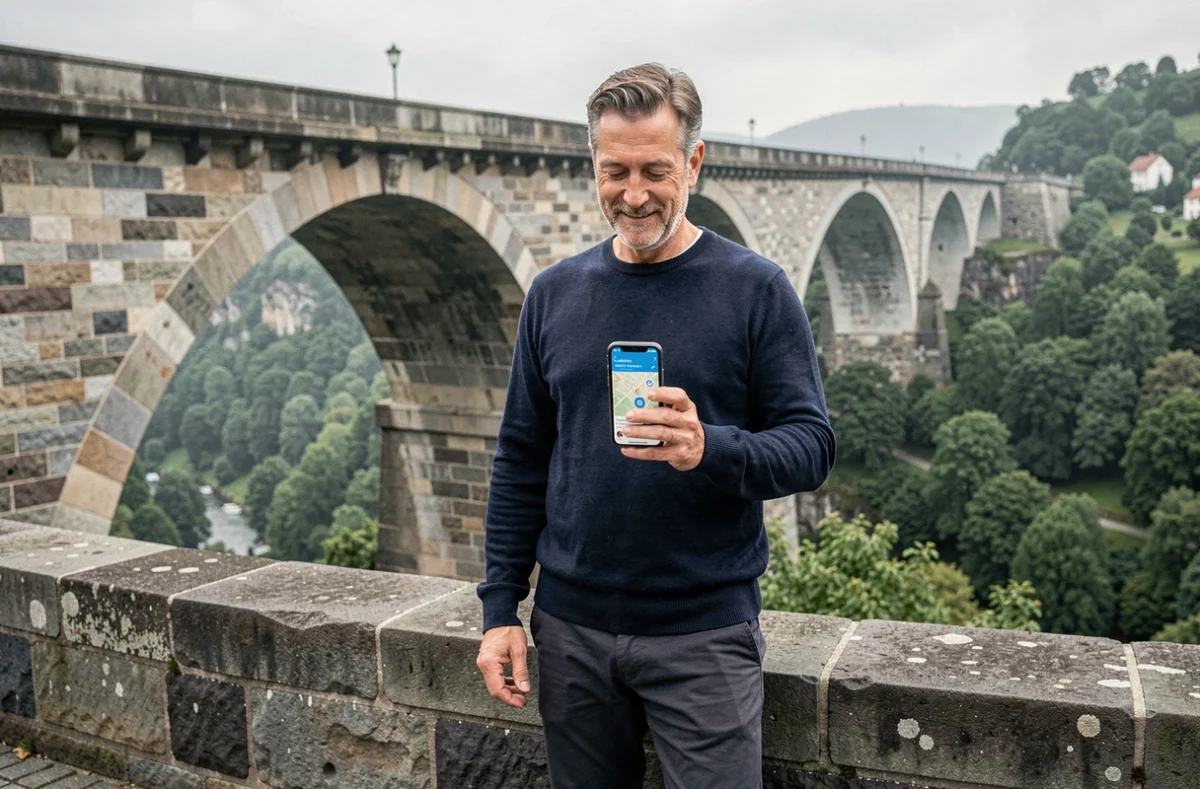
The network of marked trails in Luxembourg is particularly well-suited for linear hiking with public transport transfers. Starting from one village, walking to the next, and then returning by bus or train without retracing one’s steps: this scheme works thanks to the free transport and the density of the network.
French-speaking online travel guides rarely address this angle. Most offer loops around the same starting point, tailored for motorized visitors. An online guide specialized in Luxembourg should at least provide:
- Bus/train connections at the departure and arrival points of each stage, with updated schedules or a link to the CFL/Mobiliteit route planner
- Cumulative elevation gain and estimated duration per segment, calibrated for intermediate-level walkers
- Shorter variants to adapt the stage in case of bad weather or fatigue, without losing the logic of progression
- Actual refreshment points (not just restaurants, but also fountains and village shops)
This type of content transforms a simple tourist directory into a planning tool. It is precisely what distinguishes a functional Luxembourg travel guide from a generalist compilation.
Schengen and European heritage: content that online guides should update
The village of Schengen, known for the eponymous agreement, now has a permanent extension of the European Museum of Schengen. The monuments and the banks of the Moselle are accessible on foot in a single route, making it a coherent stop for half a day.
An online travel guide that merely mentions “Schengen, site of the agreement signing” without describing the current museum route or the access conditions from public transport misses its target. Regular content updates distinguish a reliable guide from an abandoned page. The online travel sector suffers from static articles, written once and never updated, while the Luxembourg tourist offer evolves every season.

According to RTL Today, tourist attendance levels in Luxembourg significantly exceed those of 2019, before the disruptions caused by the pandemic. This recovery further justifies a constant editorial effort on French-speaking online guides.
Technical criteria for evaluating an online Luxembourg travel guide
Not all guides are created equal. We recommend evaluating a platform based on criteria that go beyond the volume of published content.
- Editorial freshness: is the date of the last update visible on each article? A guide that does not display a date inspires less confidence than a guide that is transparent about its revisions
- Geographical granularity: does the guide cover only Luxembourg City and Vianden, or does it also offer entries on less publicized cantons (Clervaux, Wiltz, Redange)?
- Transport interoperability: do the itineraries link to Mobiliteit.lu or an integrated calculator, or do they simply state “accessible by bus” without specifics?
- Functional multilingualism: a quality French-speaking guide also translates useful Luxembourgish terms for the traveler (names of dishes, local signage, common expressions)
The market for online travel guides on Luxembourg remains fragmented. No central aggregator dominates the French-speaking query, leaving room for specialized platforms capable of producing structured, up-to-date content oriented towards practical use.
The rise of cycling and public transport in travel habits in Luxembourg is also reshaping travelers’ expectations. A guide that incorporates these modes of transport into each destination entry, rather than relegating them to a generic FAQ, meets a concrete need that traditional paper formats struggle to cover.